Why this work matters
Safe drinking water is the foundation everything else rests on. A community can rebuild a roof, restock a pantry, and reopen a school faster than it can replace a contaminated municipal supply — but only if the people doing that work are healthy enough to do it. When water fails, health fails next: gastrointestinal illness spikes, chronic conditions go untreated as clinics redirect to emergency care, and the simple act of washing hands, the most basic public-health intervention humanity has, becomes impossible. The cost of a water failure compounds with every hour it goes unaddressed, and the people who bear that cost first are always the ones least able to absorb it: the elderly, the very young, people with chronic illness, and households without the savings to simply buy their way out.
We also know, because we have seen it, that water failures do not land evenly. Rural counties served by aging infrastructure, towns whose treatment plants were sized for a population that has since shrunk, and communities whose budgets have been stretched thin for years are the ones that break first when a storm, a freeze, or a drought pushes a system past its margin. These are the same communities too often left at the back of the line when federal disaster resources are allocated. Part of our mission is to refuse that ordering. When our dispatch line rings, the question is not who you are or what your tax base looks like — it is how fast we can get clean water to the people who need it. Equity in emergency response is not a slogan for us; it is a dispatch rule.
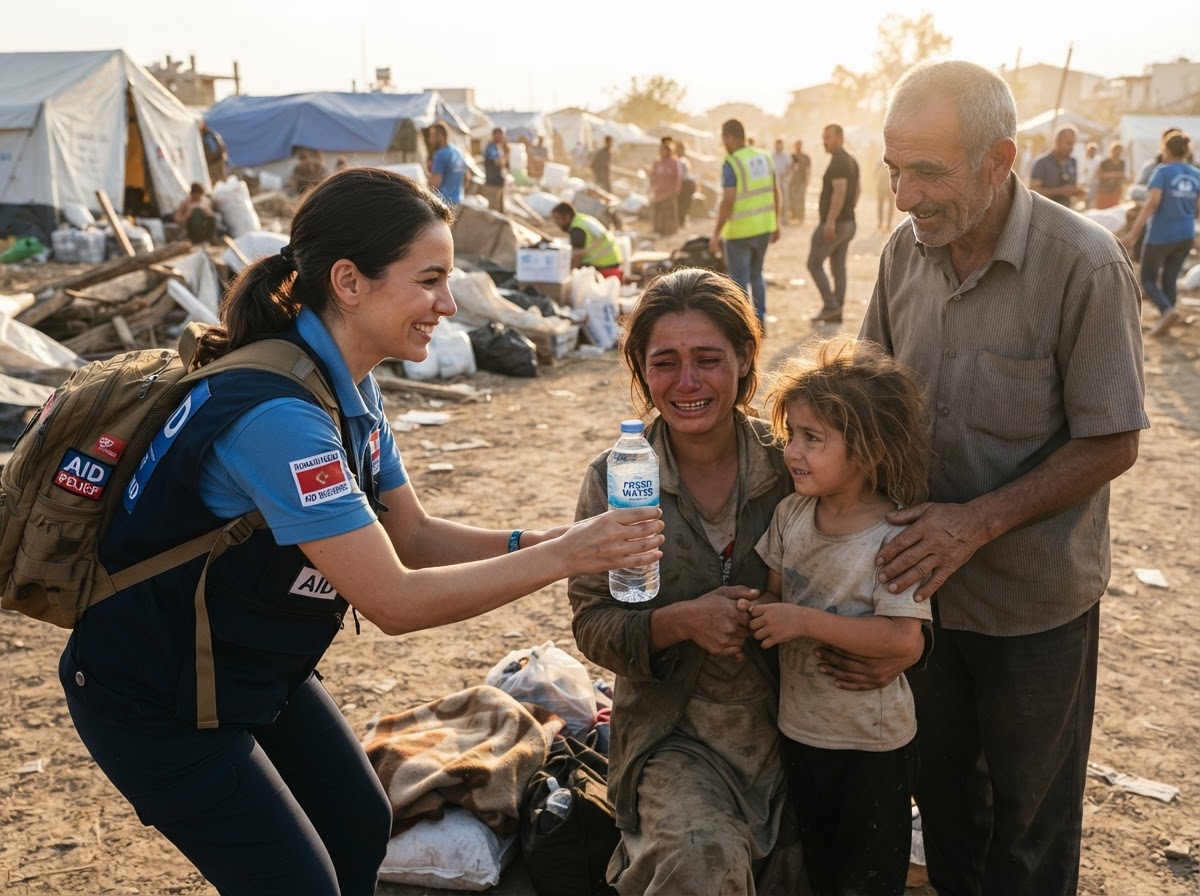
Dignity is the word we chose for a reason. When people are in crisis, what they lose first is the ordinary, taken-for-granted ability to meet their own basic needs — to pour their child a glass of water, to wash a cut, to make a pot of coffee, to flush a toilet. Restoring that ability is not just logistics; it is the restoration of a person's standing as someone whose needs matter. We have watched a mother's shoulders drop when she realizes the water coming out of the tap we set up is safe, and that she does not have to ration it for her kids. We have sat with a county judge who called us at midnight and felt, at dawn, that his town was going to be okay. Those moments are the measure of our work, more than any gallon count.
This is why we hold our standards the way we do. We test in the field because a community that has already been failed once should never be failed twice by the water that was supposed to save it. We train local operators because a response that disappears the moment our trucks pull away is not resilience — it is a pause button on the next crisis. We plan for recovery because the goal is not to be needed forever; the goal is to help communities reach a place where the next storm is an inconvenience rather than a catastrophe. Sponsored by Emergency Water System, we have the backing to hold that line: to keep crews on standby, inventory in reserve, and a phone line open around the clock, so that the answer to the next call is never "we'll get back to you next week."
Our promise to every community we serve is simple. We will come fast. We will bring water that is verified safe. We will treat the people we serve with respect. We will hand over the tools to keep going, and we will stay until the community can stand on its own. Clean water is dignity, and dignity is the least any of us owes any of us. That is the work. That is why Dignify America exists.
"The fastest path back to normal runs through clean water. Our job is to make sure that path is open — for every community, every time."